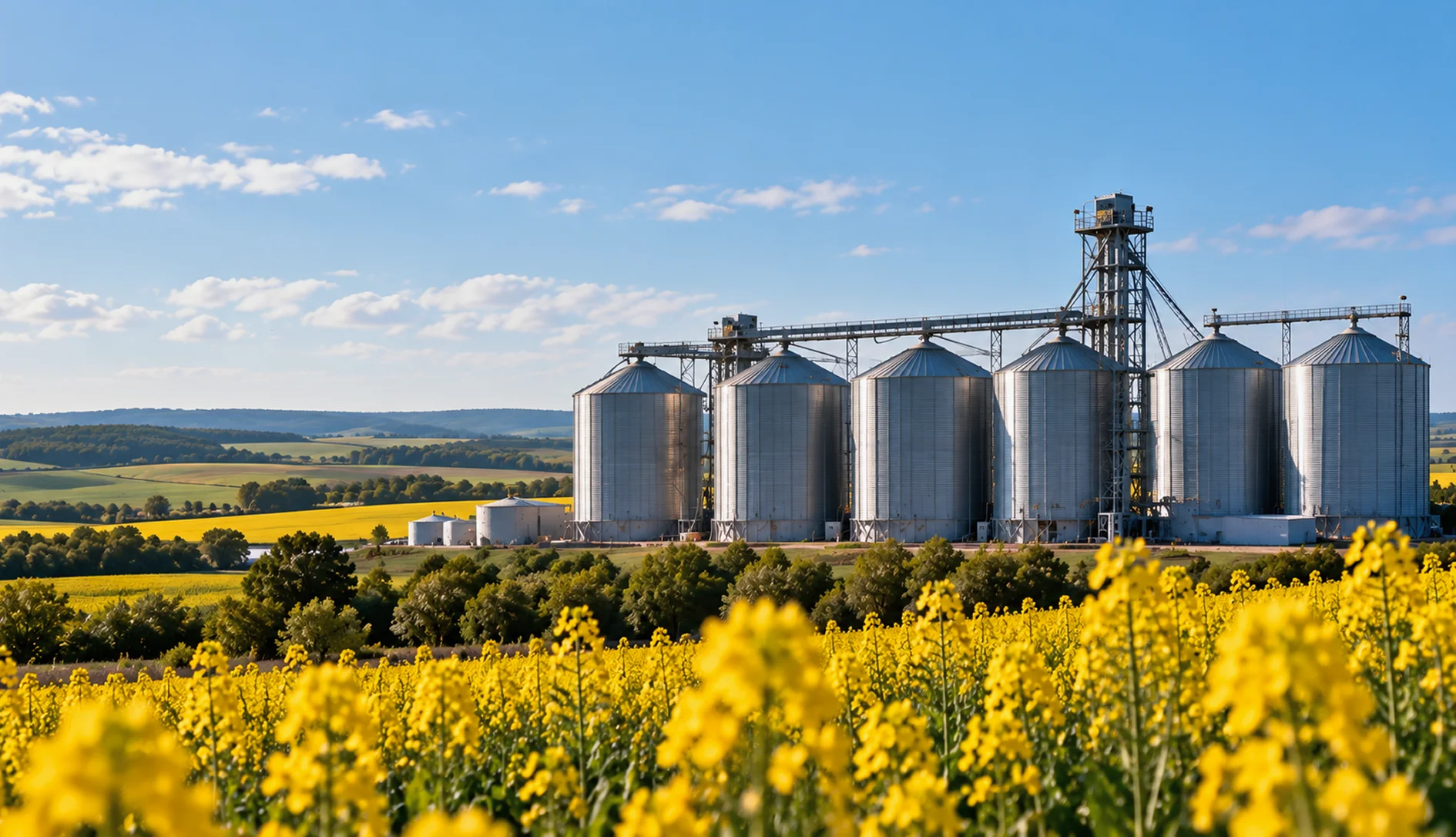
Hard commodities are natural resources that are mined or extracted, such as oil, natural gas, gold, copper and potash. Soft commodities are grown or raised, such as wheat, canola, coffee, sugar and livestock. The distinction matters because the two groups respond to different forces: hard commodities mostly follow industrial demand and supply disruptions, softs follow weather and harvests.
Canada is one of the few countries where both groups matter enormously. The same Prairie provinces that sit on some of the world’s largest oil and potash deposits also grow a large share of the world’s canola. Understanding how the two categories differ helps explain why Canadian markets, and the loonie, react the way they do.
One caution on terms before we start. In everyday use, “soft commodities” means anything farmed. On some exchanges, though, “softs” is a narrower label for a handful of tropical and fibre crops. We’ll cover both meanings below.
What is the difference between hard and soft commodities?
The core difference is origin: hard commodities come out of the ground, soft commodities grow on it. That single fact shapes how quickly supply can respond, how long the product can be stored, and which events move the price.
| Feature | Hard commodities | Soft commodities |
| Origin | Mined or extracted | Grown or raised |
| Examples | Crude oil, natural gas, gold, silver, copper, potash | Wheat, canola, corn, coffee, sugar, cattle |
| Canadian examples | Alberta crude, Saskatchewan potash, Ontario and Quebec gold | Prairie canola and wheat, Alberta cattle |
| How fast supply responds | Slowly; new mines and oil projects can take years | Resets each growing season, though livestock herds take years to rebuild |
| Storage | Generally long-lasting (metals, crude in tanks) | Often limited; many products spoil or lose quality |
| Main price drivers | Economic growth, industrial demand, geopolitics, production decisions | Weather, crop yields, disease, seasonal planting and harvest cycles |
Most platforms that offer commodity CFD trading group their markets along similar lines: energy and metals on one side, agricultural products on the other. Knowing which group you’re dealing with is the first step toward knowing what news will matter.
What does “softs” mean on commodity exchanges?
On futures exchanges, “softs” often refers specifically to a small group of crops, mostly grown in tropical climates. Grains, oilseeds and livestock are usually listed as separate categories, even though they are also soft commodities in the broader sense.
Intercontinental Exchange (ICE), for example, describes its softs markets as coffee, cocoa, cotton, sugar and frozen concentrated orange juice. It lists canola separately, under grains and oilseeds. So when a market report mentions “softs,” it usually means coffee and cocoa, not Canadian canola.
Canola has a distinctly Canadian history on the exchange side. According to ICE, canola futures began trading in Winnipeg in 1963 on the Winnipeg Commodity Exchange, now part of ICE. Unlike most global commodity benchmarks, the contract is priced in Canadian dollars per tonne, so canola traders are exposed to currency moves as well as crop news.
What are Canada’s major hard commodities?
Energy, fertilizer minerals and metals dominate. Crude oil from Alberta’s oil sands is the largest by value, and Canada is also the world’s biggest potash producer. Gold, nickel, copper, uranium and aluminum add to a broad resource base.
Oil shows how location can matter as much as the commodity itself. Most Canadian heavy crude is priced off Western Canadian Select, which usually trades below the U.S. benchmark because of its quality and the cost of getting it to market. We explain the mechanics in our guide to why Canadian oil trades below WTI.
Potash is less famous but globally significant. According to Natural Resources Canada, Canada produced 32.8 per cent of the world’s potash in 2024 (preliminary data), more than any other country, and holds the largest reserves. About 95 per cent of potash goes into fertilizer.
That makes potash a bridge between the two worlds. It’s a hard commodity by origin, but its demand depends on farmers’ planting decisions and crop prices, so it often responds to the same forces as soft commodities.
What are Canada’s major soft commodities?
Canola and wheat lead, followed by other grains, pulses such as lentils and peas, and livestock. The Prairies produce most of these crops, and a large share is exported, which exposes Canadian farm income to global prices and trade policy.
Canada is the world’s leading producer and exporter of canola, according to Export Development Canada. That global role cuts both ways. When China imposed tariffs and duties on Canadian canola products in 2025, the Saskatchewan benchmark price fell by almost 9 per cent after the seed duty was announced, as EDC reported.
Lumber sits in an awkward middle. Trees are grown, like a soft commodity, but lumber is processed, stored and traded more like an industrial material, and its price follows housing construction more than weather. Classifications differ between sources, which is a reminder that the hard/soft split is a useful guide, not a rigid rule.
Why do hard and soft commodities move differently?
Mainly because of how supply works. Hard commodity supply changes slowly and can be stored for long periods, so prices tend to follow the economic cycle and big supply shocks. Soft commodity supply resets every season, so prices swing with weather, yields and the rhythm of planting and harvest.
Consider what happens when prices rise. An oil or mining company can’t open a new oil sands project or mine next month; it may take years of planning, permitting and construction. That’s why hard commodity rallies driven by strong demand can persist for a long time. A farmer, by contrast, can plant more canola next spring, so high prices often encourage the extra supply that brings them back down.
Storage changes behaviour too. Metals and crude can sit in warehouses and tanks, letting buyers and sellers wait out a disruption. Many farm products lose quality or spoil, so sellers sometimes have to accept whatever price is available. Livestock adds its own timeline: rebuilding a cattle herd takes years, which is why beef prices can stay high long after feed costs ease.
Seasonality is far stronger in soft commodities. Prices for Northern Hemisphere crops often react to planting conditions in spring, growing-season weather in summer and harvest pressure in the fall. Energy has seasonal patterns as well, such as heating demand, but they tend to be weaker than the crop cycle.
Which is more volatile, hard or soft commodities?
Neither group is consistently more volatile. Volatility depends on the specific market, its liquidity and what’s happening at the time. Natural gas can swing wildly on weather forecasts, while some thinly traded soft markets can jump sharply because there are few buyers and sellers.
The type of risk differs, though. Hard commodities tend to carry more exposure to geopolitical events, production decisions by major producers and shifts in global growth. Soft commodities carry more exposure to weather, crop disease and trade policy aimed at specific farm products, as Canadian canola growers saw in 2025.
Liquidity deserves attention in both groups. In smaller markets, a single report or headline can move prices far more than in large benchmarks such as crude oil or gold. Wider spreads and sudden gaps are more likely where trading volume is thin.
How do traders approach hard and soft commodities?
By watching the data that actually drives each group. For hard commodities, that means inventory reports, production decisions, industrial demand indicators and geopolitical news. For soft commodities, it means weather forecasts, crop condition reports, planting and yield estimates, and trade announcements.
In Canada, Statistics Canada’s field crop surveys and farmers’ planting intentions shape expectations for canola and wheat, while global crop estimates from major producers and importers set the broader context. For energy and metals, weekly inventory figures and statements from major producer groups are closely watched.
Whichever group you trade, leverage magnifies both gains and losses, and commodity prices can gap on weather events or supply news. Check contract details, trading hours and costs before trading, and look at how a provider treats clients in practice: reading NumanCap client reviews alongside independent feedback is one way to do that.
This guide rounds out our commodities series, alongside articles on oil price differentials and trade disputes. You can find the rest of our education and markets on the NumanCap trading platform.
Frequently asked questions
What are examples of hard and soft commodities?
Hard commodities include crude oil, natural gas, gold, silver, copper and potash, which are all mined or extracted. Soft commodities include wheat, canola, corn, coffee, cocoa, sugar, cotton and livestock, which are grown or raised. In Canada, Alberta oil and Saskatchewan potash are hard commodities, while Prairie canola and wheat are soft.
Is gold a hard or soft commodity?
Gold is a hard commodity because it is mined. Along with silver, platinum and palladium, it belongs to the precious metals group. Gold also behaves partly like a financial asset, since many investors hold it as a store of value, so its price often reacts to interest rates and uncertainty as well as mining supply.
Is canola a soft commodity?
Yes, in the broad sense, because canola is a grown crop. On futures exchanges, however, it is usually classified as an oilseed rather than a “soft,” a label ICE uses for coffee, cocoa, cotton, sugar and orange juice. ICE canola futures are priced in Canadian dollars per tonne.
Why are soft commodities so affected by weather?
Because weather directly determines how much of a crop is produced and at what quality. Drought, frost, flooding or excessive heat can cut yields, while good conditions can create surpluses. Since supply resets each season and many farm products can’t be stored for long, weather news can move soft commodity prices quickly.
Is potash a hard or soft commodity?
Potash is a hard commodity because it is mined, mostly in Saskatchewan in Canada’s case. But about 95 per cent of it is used in fertilizer, so demand depends on farmers’ planting decisions and crop prices. That link means potash often responds to agricultural conditions, much like soft commodities do.
This article is for general educational purposes only and is not financial, investment, tax or legal advice. Past price behaviour and seasonal tendencies do not guarantee future results. Trading leveraged products such as CFDs carries a high risk of losing money quickly, and you can lose more than you expect. Product availability, contract terms and the rules that apply vary by country and province; confirm what applies where you live before trading.